Mastering the Shoulder Shrug: Anatomy, Biomechanics, and Proper Technique
The shoulder shrug is a simple yet highly effective isolation exercise that strengthens the muscles responsible for elevating the shoulder girdle. If you've ever wondered what muscles are worked during the shoulder shrug, the primary mover is the upper trapezius, assisted by several important stabilizing muscles. Although the exercise appears straightforward, proper shrug technique requires controlled scapular movement rather than simply lifting heavy weights. Understanding the anatomy and biomechanics of the shoulder shrug can help maximize muscle activation, improve posture, and reduce the risk of injury.
Why the Shoulder Shrug Matters
The shoulder shrug is one of the most effective exercises for strengthening the upper trapezius, a muscle that plays an important role in shoulder stability, neck support, and upper-body function. Strong scapular elevators contribute to improved posture, assist in carrying and lifting activities, and provide a stable foundation for many upper-body exercises.
Shoulder Shrug Muscles Worked
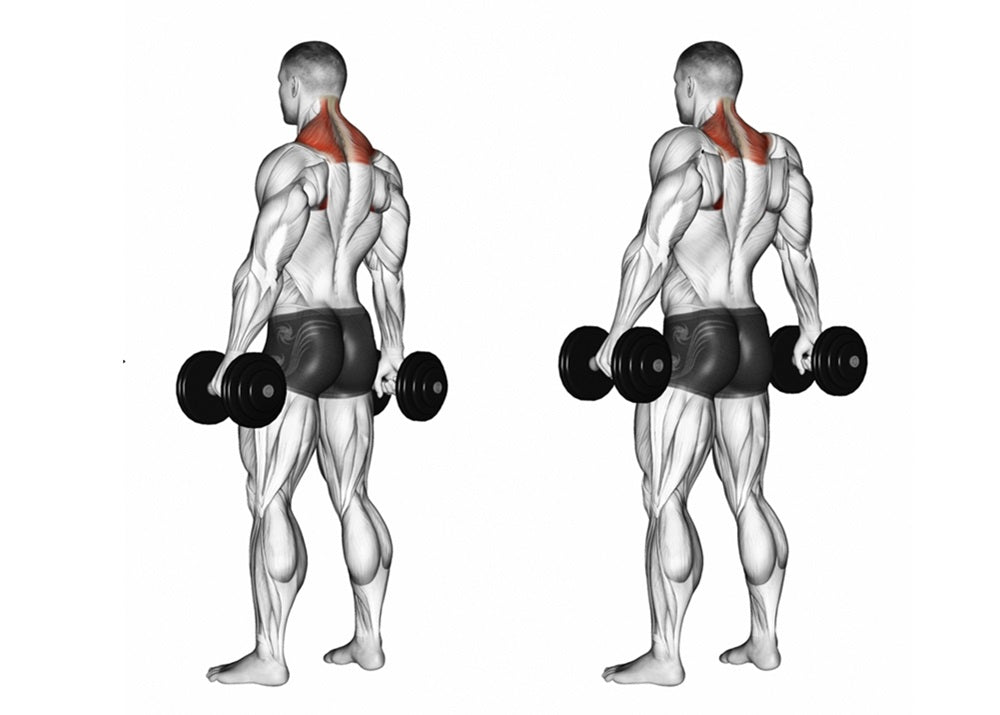
The upper trapezius is the primary muscle responsible for producing the shoulder shrug. The levator scapulae assists with scapular elevation, while the middle trapezius, lower trapezius, and serratus anterior stabilize the scapula throughout the movement. Together, these muscles work to elevate and stabilize the shoulder girdle during the exercise.
Primary Joint Action
The primary joint action of the shoulder shrug is scapular elevation, raising the shoulder blades upward toward the ears while maintaining proper alignment.
How to Perform the Shoulder Shrug
Stand upright with a dumbbell in each hand and your arms fully extended at your sides. Keep your chest up, shoulders relaxed, and spine in a neutral position. Slowly elevate your shoulders straight upward toward your ears while avoiding forward or backward rolling. Pause briefly at the top of the movement, then slowly lower the shoulders back to the starting position under control. Maintain smooth, deliberate movement throughout each repetition.
Biomechanical Considerations
The shoulder shrug is most effective when the movement is isolated to scapular elevation. Rolling the shoulders forward or backward does not increase upper trapezius activation and may place unnecessary stress on the shoulder joints. Performing the exercise through a full, controlled range of motion with a brief pause at peak contraction helps maximize muscle activation. Because the movement has a relatively short range of motion, using excessive weight often reduces technique quality without improving training effectiveness.
Common Shoulder Shrug Mistakes
Several common mistakes can reduce the effectiveness of the shoulder shrug:
-
Rolling the shoulders instead of lifting them straight upward.
-
Using excessive weight that limits range of motion.
-
Performing the movement too quickly and relying on momentum.
-
Failing to pause briefly at the top of the movement.
-
Leaning the torso or bending the knees to assist the lift.
Training Tips
Choose a weight that allows complete control throughout the movement. Focus on lifting the shoulders vertically rather than pulling them forward or backward. Perform each repetition with a controlled tempo and pause briefly at the top to maximize upper trapezius activation. The shoulder shrug is an excellent accessory exercise following compound pulling movements such as rows and deadlifts.
Safety and Injury Prevention
Maintain a neutral head and neck position throughout the exercise and avoid excessive neck movement. Do not roll the shoulders, as this provides no additional benefit and may increase unnecessary joint stress. Use a controlled range of motion and avoid jerking the weight upward with momentum.
Final Thoughts
The shoulder shrug is an effective isolation exercise for strengthening the upper trapezius and improving scapular control. By understanding the anatomy, biomechanics, and proper technique behind the movement, you can perform the exercise more safely while maximizing muscle activation and upper-body function.
Related Exercise Pages
Continue your exercise education by exploring more anatomy, biomechanics, and practical training resources at KinX Learning.