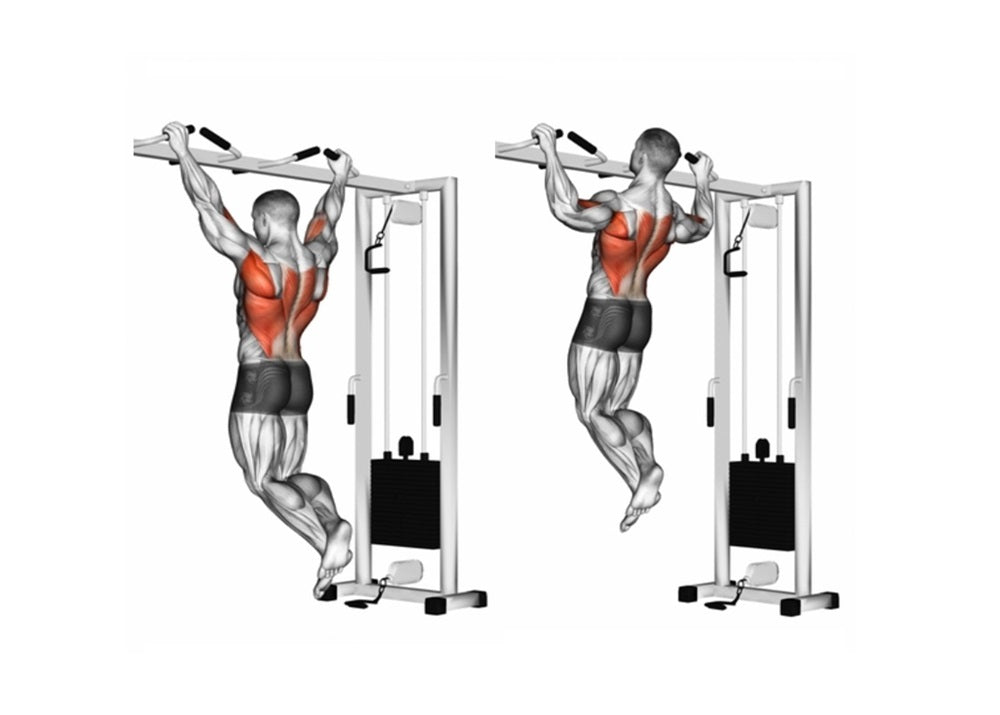
The pull-up is one of the most effective bodyweight exercises for developing upper-body pulling strength. Although it is commonly associated with the back, performing a pull-up requires coordinated action from several muscles of the shoulders, arms, and upper back.
Understanding the muscles worked during the pull-up—and the joint actions that produce the movement—can help improve exercise technique, programming, and overall training effectiveness.
What Muscles Do Pull-Ups Work?
The pull-up primarily targets the latissimus dorsi, with significant assistance from the biceps brachii, brachialis, and brachioradialis. Muscles that control the scapula, including the trapezius and rhomboids, also contribute to efficient movement and shoulder stability.
Together, these muscles allow you to pull your body upward toward the bar and control your descent back to the starting position.
Latissimus Dorsi: The Primary Mover
The latissimus dorsi is the large, broad muscle covering much of the lower and middle back. It is the primary muscle responsible for movement of the upper arm during the pull-up.
As you pull upward, the latissimus dorsi produces shoulder adduction, drawing the upper arm downward toward the torso. Depending on arm position and technique, it also contributes to shoulder extension.
Developing the latissimus dorsi helps improve vertical pulling strength and contributes to many other pulling exercises, including the lat pulldown and rowing movements.
Biceps Brachii
The biceps brachii crosses both the shoulder and elbow joints and plays an important assisting role during the pull-up.
As the body moves toward the bar, the elbows flex. The biceps contributes to this elbow flexion while the larger muscles of the back produce movement at the shoulder.
Grip position can influence the contribution of the biceps. A supinated grip, as used during a chin-up, generally places the biceps in a mechanically favorable position compared with the traditional pronated pull-up grip.
Brachialis and Brachioradialis
The biceps is not the only muscle responsible for bending the elbow.
The brachialis, located beneath the biceps, is a powerful elbow flexor that contributes regardless of forearm position.
The brachioradialis, which runs along the lateral forearm, also assists elbow flexion and becomes particularly important when the forearm is positioned closer to neutral.
Together, the biceps, brachialis, and brachioradialis provide the elbow-flexion force necessary to assist the larger pulling muscles.
Trapezius and Rhomboids
Efficient pull-ups also require controlled movement of the shoulder blades.
The trapezius and rhomboids help position and stabilize the scapulae as the body moves toward the bar. Scapular depression and retraction contribute to a stable shoulder complex and provide a strong foundation for movement of the arms.
Rather than allowing the shoulders to shrug upward toward the ears, maintaining controlled scapular positioning helps support efficient pulling mechanics.
Joint Actions During the Pull-Up
The pull-up primarily involves shoulder adduction and elbow flexion, where the upper arms move downward toward the torso as the elbows bend to pull the body upward toward the bar.
Scapular movement also occurs throughout the exercise. The shoulder blades are controlled through depression and retraction during the upward phase, while the surrounding musculature helps maintain shoulder stability.
During the lowering phase, these actions are gradually reversed as the muscles work eccentrically to control the descent.
Pull-Up Range of Motion
Begin the pull-up from a controlled hanging position with the arms extended. Initiate the movement through the shoulders and back, then continue pulling until the chin reaches or passes the level of the bar.
Lower the body under control until the arms return to the starting position.
A complete range of motion allows the muscles to work through a greater movement arc, but range should never be forced at the expense of shoulder comfort, control, or proper technique.
Common Pull-Up Mistakes
Using Momentum
Swinging the body or kicking the legs can make it easier to reach the bar but reduces the demand placed on the targeted muscles.
Cue: Keep the body controlled and initiate the pull without swinging or kicking.
Shrugging the Shoulders
Allowing the shoulders to rise excessively toward the ears can interfere with efficient scapular mechanics.
Cue: Maintain controlled shoulders and think about drawing the shoulder blades downward as you begin the pull.
Using an Incomplete Range of Motion
Performing only partial repetitions can limit the amount of movement performed by the shoulder and elbow musculature.
Cue: Start from a controlled extended position and pull toward the bar using the greatest comfortable range you can maintain with proper technique.
Pull-Up vs. Chin-Up
Pull-ups and chin-ups use many of the same muscles, but changing the grip alters the mechanics of the exercise.
A traditional pull-up uses a pronated grip, with the palms facing away from the body. A chin-up uses a supinated grip, with the palms facing toward the body.
Both exercises strongly involve the latissimus dorsi and elbow flexors, but the supinated grip generally allows greater contribution from the biceps brachii. For many people, this makes the chin-up easier to perform than a pronated pull-up.
Neither variation is inherently better. Exercise selection should depend on training goals, ability, comfort, and the desired emphasis.
How to Improve Your Pull-Up
If you cannot yet perform a full pull-up, several exercises can help develop the required strength.
Lat pulldowns develop a similar vertical pulling pattern while allowing the resistance to be adjusted.
Assisted pull-ups reduce the amount of body weight that must be lifted while preserving the basic movement pattern.
Controlled negatives emphasize the eccentric phase by starting near the top position and slowly lowering the body.
Rows, biceps exercises, and scapular-control exercises can also strengthen muscles that contribute to pull-up performance.
Why Understanding Pull-Up Anatomy Matters
The pull-up is not simply a test of back or arm strength. It is a coordinated movement involving the shoulder, elbow, and scapula.
Understanding the role of the latissimus dorsi, elbow flexors, trapezius, rhomboids, and other supporting muscles makes it easier to recognize why grip, range of motion, scapular control, and technique affect performance.
Learning the anatomy and biomechanics behind an exercise transforms it from simply completing repetitions into understanding how and why the movement works.
Learn More About Exercise Anatomy
KinX Learning provides practical education in exercise anatomy, biomechanics, technique, and injury prevention to help you better understand the movements you perform and teach.
Explore the Pull-Up Exercise Page for a detailed breakdown of execution, muscles involved, safety considerations, and practical training tips.
Want to learn more about the muscles behind common exercises?
Download the FREE Understanding Muscle Groups in Exercise – Ultimate Guide at:
kinxlearning.com/signup