
Exercise Reference
Deadlift
The Deadlift is a compound lower-body and posterior-chain exercise designed to strengthen the muscles responsible for hip extension, spinal stabilization, and controlled knee extension, particularly the gluteal muscles, hamstrings, erector spinae, and quadriceps. Performed by lifting a barbell from the floor to an upright standing position, the movement develops total-body strength through coordinated hip and knee extension while requiring stable positioning of the torso. Proper execution emphasizes controlled hip-hinge mechanics, stable spinal alignment, and coordinated extension of the hips and knees throughout the lift.
Below is a quick reference overview of the major muscles and joint actions involved in the Deadlift, followed by practical guidance for performing the exercise safely and effectively.
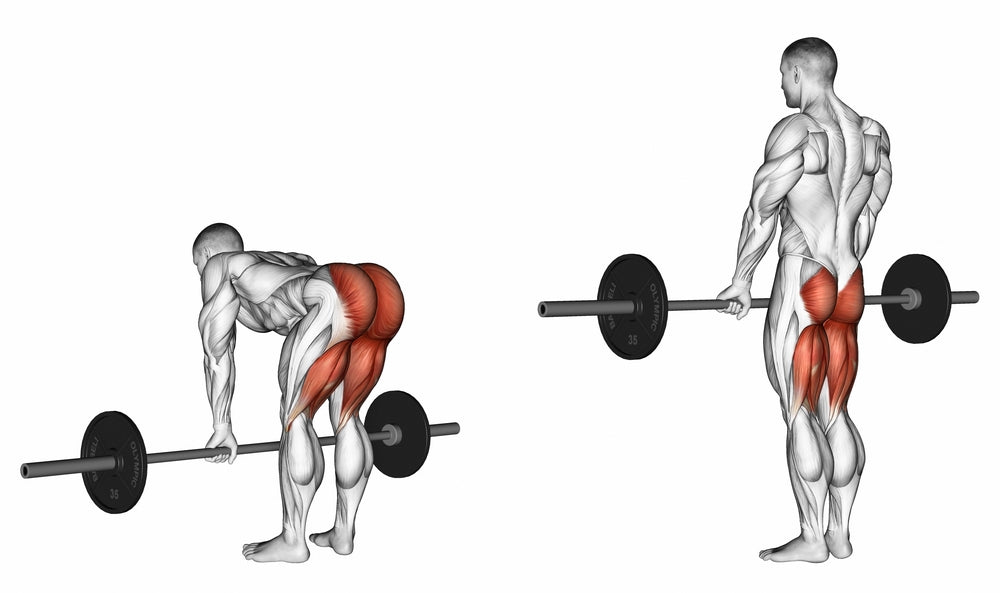
Joint Action and Muscles Involved
The deadlift, a fundamental compound exercise, hinges on the joint action known as hip extension and knee extension. This dynamic movement engages the hip and knee joints simultaneously, requiring the powerful contraction of muscles to lift the weight from the ground.
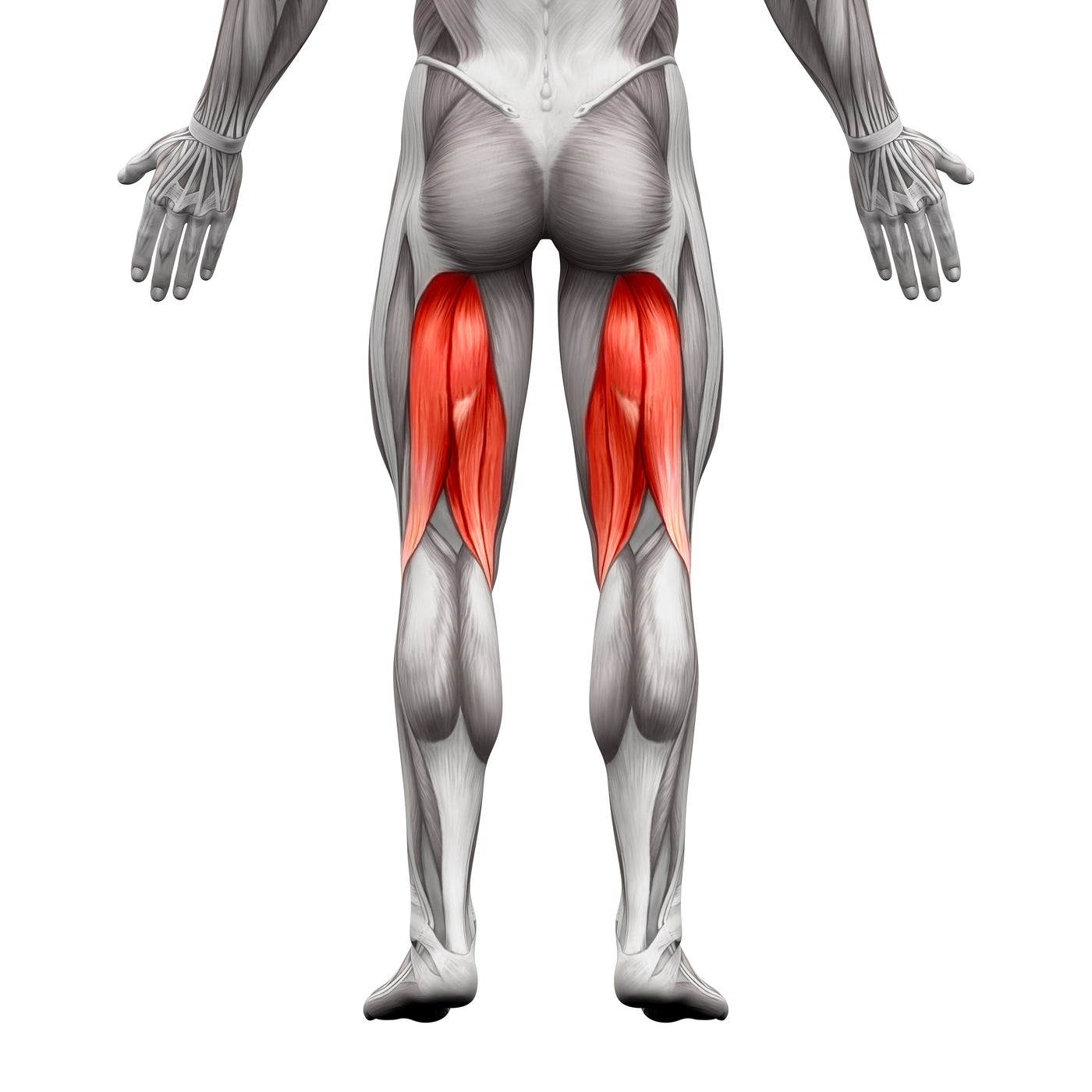
In the realm of muscles, the deadlift recruits a vast array of muscle groups to execute the lift effectively. The primary muscles involved include the erector spinae, gluteus maximus, hamstrings, quadriceps, and adductor magnus. These muscles work in harmony to provide stability, generate force, and facilitate the controlled movement of lifting a heavy load from a static position. Additionally, the deadlift challenges the muscles of the core, including the rectus abdominis and obliques, as they play a crucial role in maintaining a stable torso throughout the lift. The trapezius and rhomboids are also activated to support the upper back, enhancing overall postural strength during the deadlift. This comprehensive engagement of muscle groups underscores the deadlift's efficacy in building full-body strength and functional power.
Exercise Execution
Starting Position
Stand with the feet approximately hip-width apart and position the barbell over the mid-foot. Bend at the hips and knees to grip the bar with both hands just outside the legs. Keep the chest lifted, the shoulders positioned slightly in front of the bar, and the spine in a neutral alignment.
Movement
Lift the barbell by extending the hips and knees simultaneously while maintaining a stable torso and neutral spine. Keep the bar close to the body as it moves upward until reaching a fully upright standing position.
Ending Position
Pause briefly at the top with the hips and knees fully extended, then lower the barbell under control by hinging at the hips and bending the knees until returning the bar to the floor.
Video Demonstration
This video demonstrates the proper execution of the deadlift, showing controlled hip-hinge mechanics, stable spinal alignment, and coordinated hip and knee extension throughout the exercise.
Exercise Tips
Keep the Bar Close
Maintain the bar close to the legs throughout the lift to improve leverage and reduce spinal stress.
Lead with Hip Extension
Focus on driving the hips forward as the bar rises to emphasize posterior-chain engagement.
Maintain a Neutral Spine
Keep the chest lifted and the spine aligned throughout the movement.
Control the Lowering Phase
Lower the bar under control to reinforce proper hip-hinge mechanics and maintain muscle tension.

Safety Considerations
Maintain a neutral spine throughout the movement and avoid rounding the lower back, as this can place unnecessary stress on the lumbar spine. Keep the bar close to the body to reduce strain on the lower back and improve lifting mechanics. Use a resistance level that allows proper control of the movement and stable positioning of the torso. If discomfort occurs in the lower back, hips, or knees, stop the exercise and reassess technique before continuing.
TRY Our Premium ebooks
Have you found our free content on the kinesiology of exercise to be insightful and valuable? If so, we have an exciting opportunity for you to take your learning to the next level!
Our exclusive collection of Premium Ebooks, meticulously crafted by a top expert in the field of kinesiology., delve deep into the science behind human movement, muscle activation, and biomechanics. Whether you're a seasoned fitness professional or a curious learner, our ebooks cater to all levels of expertise.
Deadlift vs Squat
The Deadlift and Squat both strengthen the lower body, but they differ in movement mechanics and muscle emphasis. The Deadlift is primarily a hip-hinge movement that emphasizes the posterior chain, including the gluteal muscles, hamstrings, and spinal extensors. In contrast, the Squat combines hip and knee flexion and extension with greater emphasis on the quadriceps and overall lower-body coordination. Both exercises are highly effective for building lower-body strength. The deadlift emphasizes posterior-chain development and total-body pulling strength, while the squat emphasizes lower-body pressing mechanics and functional strength.
Related Exercises
Anatomical, Biomechanical and Practical Exercise Education
Exercise Classroom
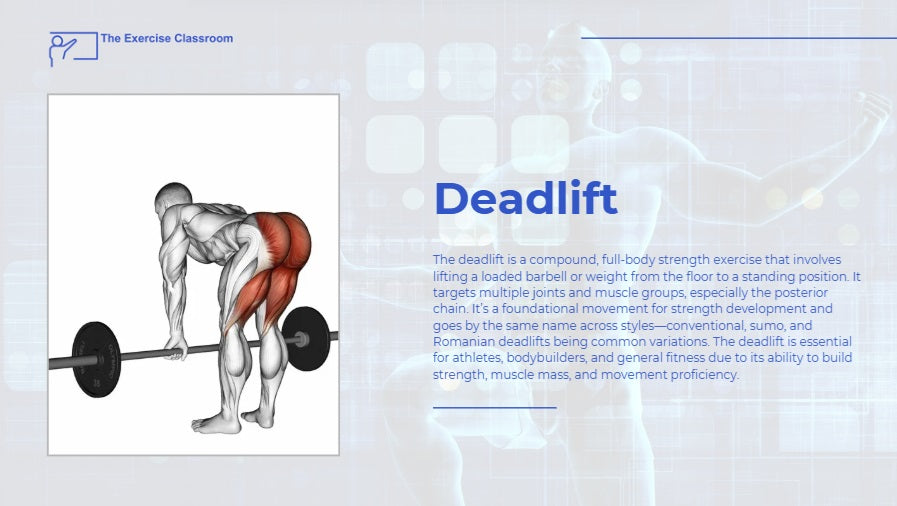
Explore the Deadlift in The Exercise Classroom to learn more about the muscles involved, joint actions, and biomechanical principles that influence effective lower-body and posterior-chain training.

Continue Your Exercise Education
Mastering exercise technique requires a deeper understanding of biomechanics, injury prevention, and precise movement cues.
The KinX Learning Ultimate Guide series provides structured analysis of 75 popular weight training exercises, helping you train with greater confidence, efficiency, and safety.
Explore the complete system:
Exercise Anatomy and Biomechanics: Ultimate Guide
Exercise Safety and Injury Prevention: Ultimate Guide
Exercise Cues: Precision Coaching for 75 Essential Exercises
Or get all three guides together with the Ultimate Guides Bundle.