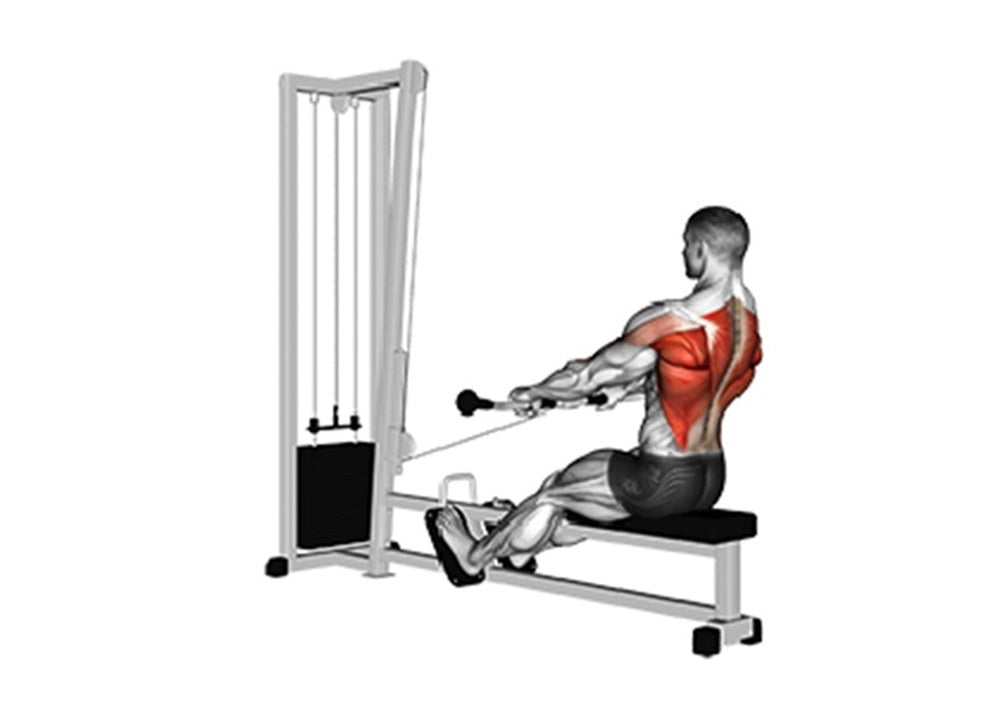

The deadlift is one of the most effective compound resistance training exercises for developing lower body strength, posterior chain musculature, and total body stability. Although the movement appears simple, proper deadlift mechanics require coordinated joint actions, spinal stabilization, hip hinge control, and controlled force production.
Understanding the anatomy and biomechanics involved in the deadlift can help improve exercise effectiveness, movement efficiency, and lifting safety.
Primary Joint Actions During the Deadlift
The deadlift primarily involves:
- Hip joint extension
- Knee joint extension
- Spinal stabilization
- Scapular stabilization
The movement is driven primarily through coordinated hip and knee extension while the torso remains stabilized throughout the lift.
Primary Joint Actions During the Deadlift
The deadlift primarily involves:
- Hip joint extension
- Knee joint extension
- Spinal stabilization
- Scapular stabilization
The movement is driven primarily through coordinated hip and knee extension while the torso remains stabilized throughout the lift.
Importance of Proper Hip Hinge Mechanics
The deadlift is fundamentally a hip hinge movement.
One of the most common deadlift mistakes is excessive spinal flexion caused by inadequate hip hinge mechanics. Proper hip hinge positioning allows the hips to move backward while maintaining a more stable spinal position.
Learning to properly load the hips while maintaining torso control can help improve movement efficiency and lifting mechanics.
Spinal Position and Stability
Maintaining a controlled neutral spine during the deadlift is important for force transfer and overall movement stability.
Important considerations include:
- Maintaining torso tension
- Avoiding excessive lumbar rounding
- Keeping the chest positioned upward
- Stabilizing the core throughout the movement
Proper bracing and torso control can help improve lifting mechanics while reducing unnecessary movement during the exercise.
Bar Positioning and Movement Path
Bar positioning is another important biomechanical consideration during the deadlift.
The bar should generally remain close to the body throughout the movement to improve leverage and reduce unnecessary stress on the lower back.
Efficient bar path control contributes to improved lifting mechanics and exercise effectiveness.
The Exercise Classroom
The Exercise Classroom focuses on anatomical, biomechanical, and practical exercise education designed to improve exercise understanding and movement quality.
The deadlift lesson explores:
- exercise execution
- prime movers
- muscle mechanics
- biomechanical considerations
- safety and injury prevention
- proper technique and setup
Related Content
The Exercise Classroom: Deadlift
Learn More
Learn More @ KinX Learning
Anatomical, Biomechanical and Practical Exercise Education