
Exercise Reference
Seated Calf Raise (Seated Heel Raise)
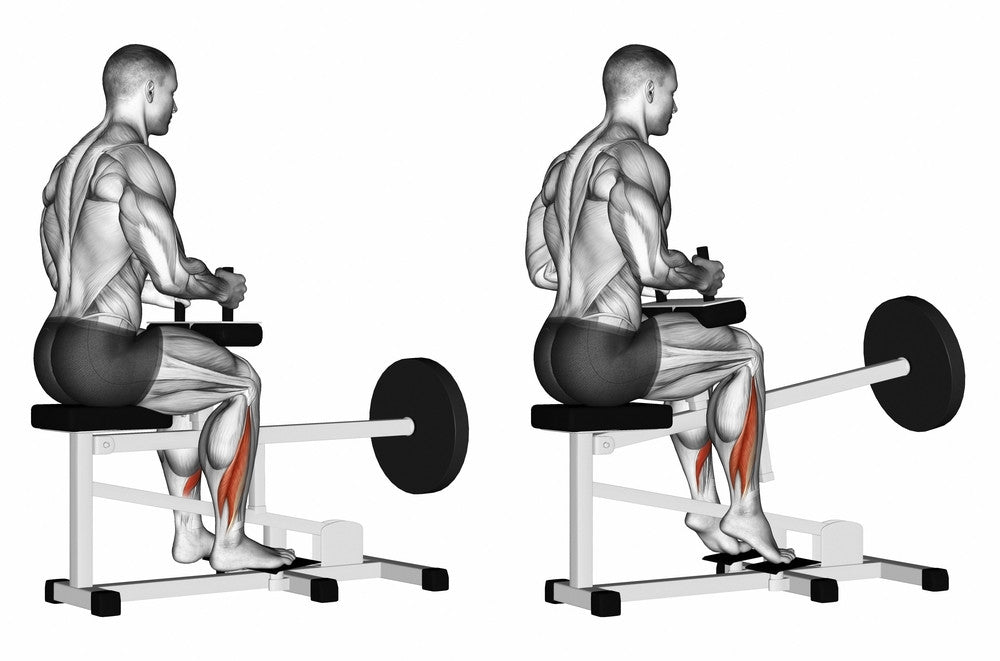
The Seated Calf Raise is an isolation lower-leg exercise used to strengthen the calf muscles through controlled ankle plantarflexion. This movement primarily targets the soleus muscle, which plays an important role in ankle stability and endurance during standing, walking, and running activities. Because the knees are flexed in the seated position, the exercise places greater emphasis on the soleus compared to standing calf raise variations.
Joint Action and Major Muscles Involved
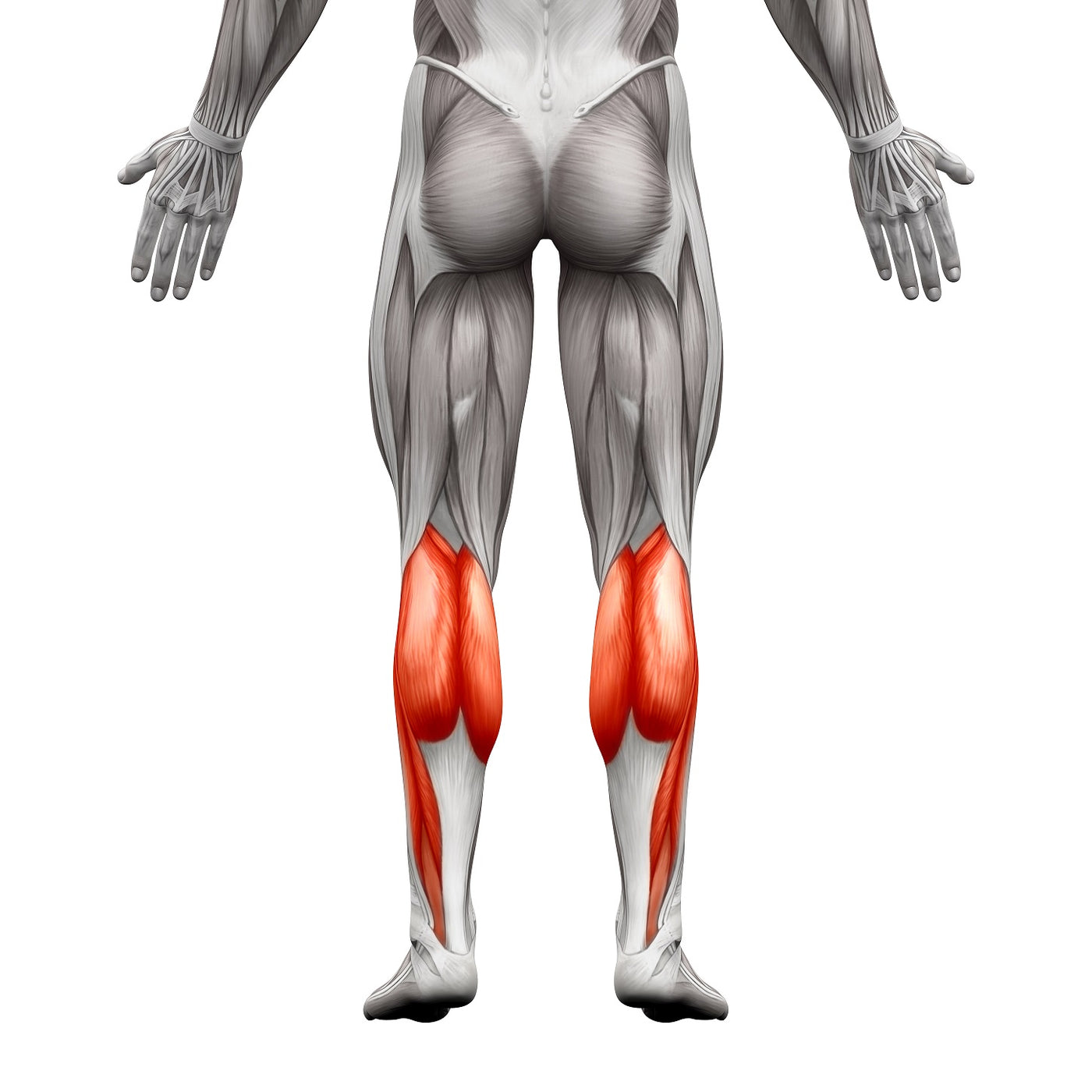
The Seated Calf Raise, or Seated Heel Raise, primarily involves ankle plantarflexion as you lift your heels off the ground while seated. This movement targets the gastrocnemius and soleus muscles, collectively known as the calf muscles. The contraction of these muscles during the exercise contributes to the development and strengthening of the calves, promoting muscular endurance and definition.
Exercise Execution
Starting Position
Sit on the seated calf raise machine with the balls of your feet placed on the foot platform and your heels positioned just off the edge. Position the knee pads securely over your thighs and keep your torso upright with your back against the seat. Allow your heels to lower so the ankles move into a comfortable stretch position.
Movement
Press through the balls of your feet and raise your heels upward by extending the ankles (plantarflexion). Continue lifting until the calves contract fully at the top of the movement. Pause briefly while maintaining control.
Ending Position
Slowly lower your heels back down by allowing the ankles to flex, returning to the stretched starting position. Maintain controlled movement throughout the lowering phase and repeat for the desired number of repetitions.
Video Demonstartion
This video demonstrates the proper execution of the seated calf raise, showing controlled ankle plantarflexion and proper positioning on the calf raise machine.

Safety Conderations
Lower the heels under control and avoid forcing the ankles into an extreme stretch position at the bottom of the movement, as excessive stretching under load can place unnecessary strain on the Achilles tendon and surrounding structures. Perform the movement smoothly without bouncing or using momentum, since rapid or jerking motions can increase stress on the ankle joint and calf muscles. Use a resistance level that allows full control throughout the exercise, because excessive weight can compromise technique and increase joint strain. If you feel pain in the Achilles tendon, ankle joint, or the bottom of the foot during the movement, stop the exercise and reassess your technique or reduce the resistance before continuing.
Exercise Tips
Control the Tempo
Raise the heels smoothly and lower them under control to keep constant tension on the calf muscles.
Use a Full Range of Motion
Allow the heels to lower enough to feel a stretch in the calves, then lift fully to achieve strong ankle plantarflexion.
Focus on the Balls of the Feet
Press through the balls of the feet rather than the toes to maintain proper force through the calf muscles.
Avoid Using Momentum
Keep the torso steady and move the ankles deliberately so the calf muscles perform the work throughout the movement.
Seated Calf Raise vs Standing calf raise
The Seated Calf Raise and Standing Calf Raise both strengthen the calf muscles through ankle plantarflexion, but they emphasize different muscles within the calf complex. In the seated calf raise, the knees remain flexed, which reduces the contribution of the gastrocnemius and places greater emphasis on the soleus muscle. This makes the seated variation particularly effective for developing calf endurance and stability.
In contrast, the Standing Calf Raise is performed with the knees extended, allowing the gastrocnemius muscle to contribute more strongly to the movement. Because the gastrocnemius crosses both the knee and ankle joints, it is more active when the leg is straight. As a result, the standing calf raise is often used to develop overall calf size and strength.
Both exercises are valuable in a balanced training program. The seated calf raise emphasizes the deeper soleus muscle, while the standing calf raise places greater demand on the gastrocnemius, allowing for more complete development of the calf muscles.
Related Exercises

Anatomical, Biomechanical and Practical Exercise Education
The Exercise Classroom
Explore the Seated Calf Raise in The Exercise Classroom to learn more about the muscles involved, joint actions, and biomechanical principles that influence effective calf training.

Continue Your Exercise Education
Mastering exercise technique requires a deeper understanding of biomechanics, injury prevention, and precise movement cues.
The KinX Learning Ultimate Guide series provides structured analysis of 75 popular weight training exercises, helping you train with greater confidence, efficiency, and safety.
Explore the complete system:
Exercise Anatomy and Biomechanics: Ultimate Guide
Exercise Safety and Injury Prevention: Ultimate Guide
Exercise Cues: Precision Coaching for 75 Essential Exercises
Or get all three guides together with the Ultimate Guides Bundle.