
Exercise Reference
Reverse WristCurl (Wrist Extension)
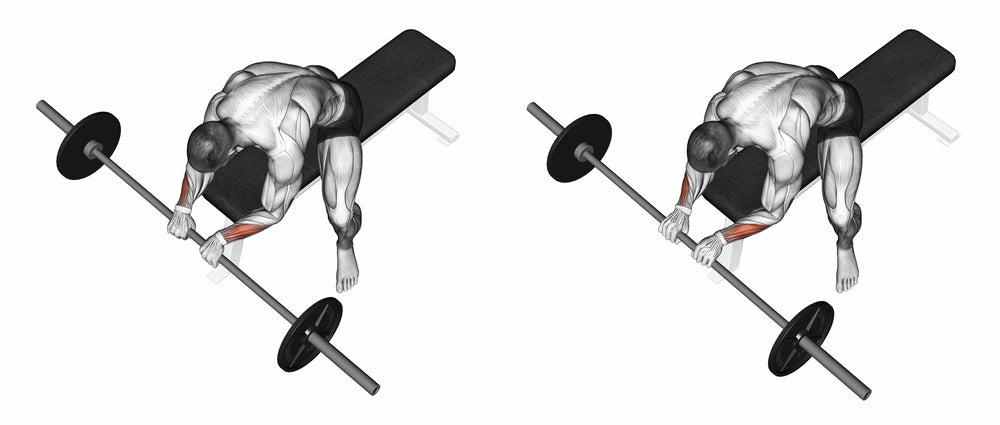
The Reverse Wrist Curl (Wrist Extension) is an isolation forearm exercise designed to strengthen the muscles responsible for extending the wrist, particularly the forearm extensors. Performed by lifting the back of the hand upward while the forearms are supported, the movement helps improve wrist stability, forearm balance, and overall arm strength. Proper execution emphasizes controlled movement and stable positioning.
Joint Action and Muscles Involved
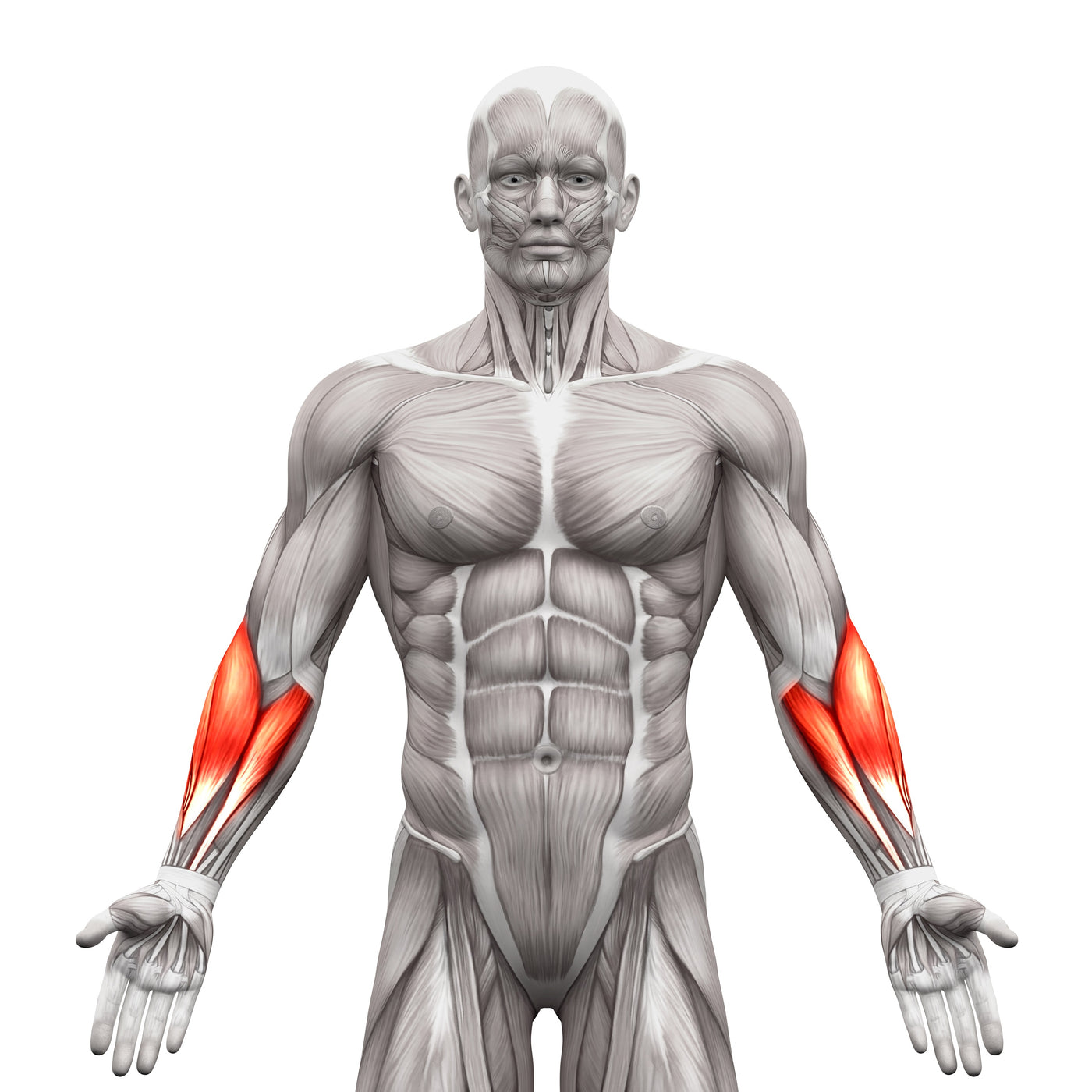
During the Reverse Wrist Curl, the primary joint action is wrist extension, where the back of the hand moves away from the forearm. This movement targets the wrist extensor muscles, including the extensor carpi radialis brevis, extensor carpi radialis longus, extensor carpi ulnaris, and the extensor digitorum. Additionally, the extensor indicis and extensor digiti minimi are engaged, contributing to the overall extension of the wrist joint.
Exercise Tips
Technique: Sit or stand with a straight back, holding a barbell or dumbbells with an overhand grip. Rest your forearms on a bench or your thighs, allowing your wrists to hang beyond the support.
Range of Motion: Perform a controlled wrist extension, lifting the weight by moving the back of your hands away from your forearms. Ensure a full range of motion to effectively target the wrist extensors.
Amount of Weight Used: Start with a light weight to establish proper form. Gradually increase resistance as your wrist strength improves, focusing on controlled movements throughout.
Grip: Use an overhand grip, keeping your wrists in a neutral position. Maintain a secure grip on the barbell or dumbbells throughout the exercise to prevent slippage.
Variations: Explore variations with different equipment, such as using a barbell, dumbbells, or a wrist curl machine. Each variation provides a slightly different stimulus to the wrist extensors.
Unique Muscle Involvement: This exercise primarily targets the wrist extensor muscles, including the extensor carpi radialis brevis, extensor carpi radialis longus, extensor carpi ulnaris, extensor digitorum, extensor indicis, and extensor digiti minimi.
Breathing: Inhale as you lower the weight and exhale during the upward phase. Maintain a consistent breathing rhythm to enhance stability and concentration.
Forearm Position: Keep your forearms stationary on a bench or thighs, isolating the wrist extensors. Minimize upper arm movement to maximize the effectiveness of the exercise.
Controlled Eccentric Phase: Pay attention to the lowering (eccentric) phase of the movement. Resist the urge to let the weight drop quickly, emphasizing control for optimal muscle engagement and joint health.
Progression: Track your progress and gradually increase resistance. Strive for incremental improvements in strength and endurance over time to continually challenge your wrist extensors.
Safety Considerations
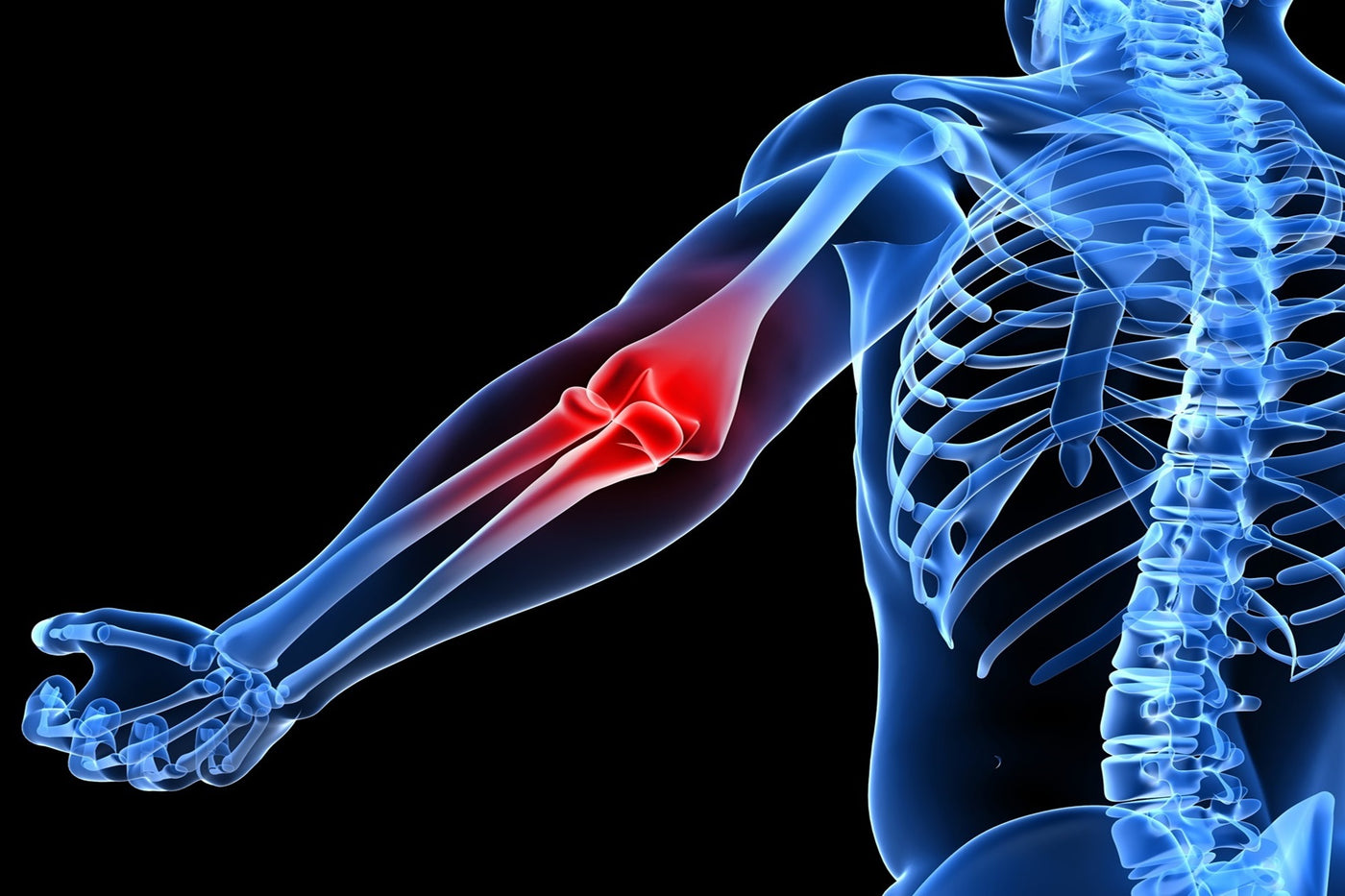
Use light resistance, as the wrist extensors are smaller and more prone to fatigue. Keep the forearms supported and avoid jerking the weight upward. Perform controlled repetitions and avoid excessive range of motion. Stop if discomfort occurs in the wrist or along the top of the forearm.
Related Exercises

Continue Your Exercise Education
Mastering exercise technique requires a deeper understanding of biomechanics, injury prevention, and precise movement cues.
The KinX Learning Ultimate Guide series provides structured analysis of 75 popular weight training exercises, helping you train with greater confidence, efficiency, and safety.
Explore the complete system:
Exercise Anatomy and Biomechanics: Ultimate Guide
Exercise Safety and Injury Prevention: Ultimate Guide
Exercise Cues: Precision Coaching for 75 Essential Exercises
Or get all three guides together with the Ultimate Guides Bundle.