
Exercise Reference
Lunge
The Lunge is a compound lower-body exercise designed to strengthen the muscles responsible for hip and knee extension, particularly the quadriceps, gluteal muscles, and hamstrings. Performed by stepping one leg forward and lowering the body through controlled hip and knee flexion, the movement develops lower-body strength while also challenging balance and coordination. Proper execution emphasizes stable foot positioning, controlled descent, and coordinated extension of the hips and knees throughout the movement.
Below is a quick reference overview of the major muscles and joint actions involved in the Lunge, followed by practical guidance for performing the exercise safely and effectively.
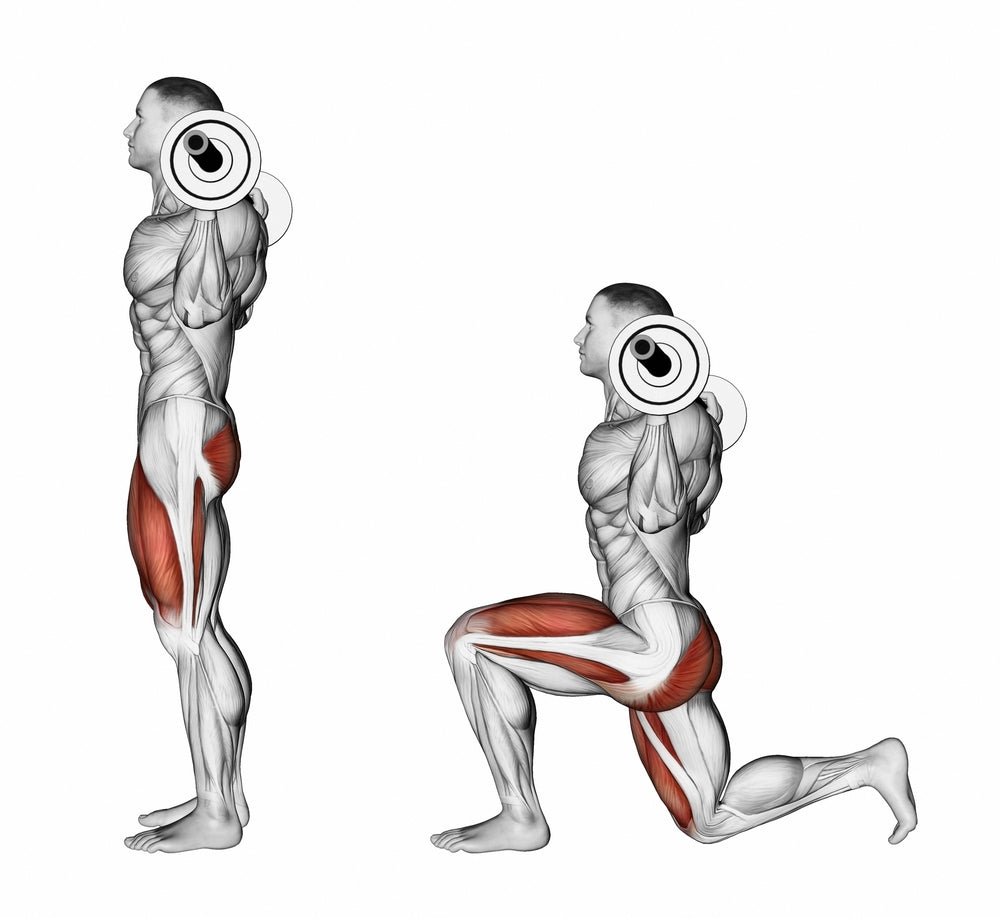
Joint Action and Muscles Involved
The Lunge, a dynamic lower-body exercise, centers around the joint action of hip and knee flexion and extension. As you step forward into the lunge position, the front knee flexes while the back knee extends, engaging the hip and knee joints simultaneously.
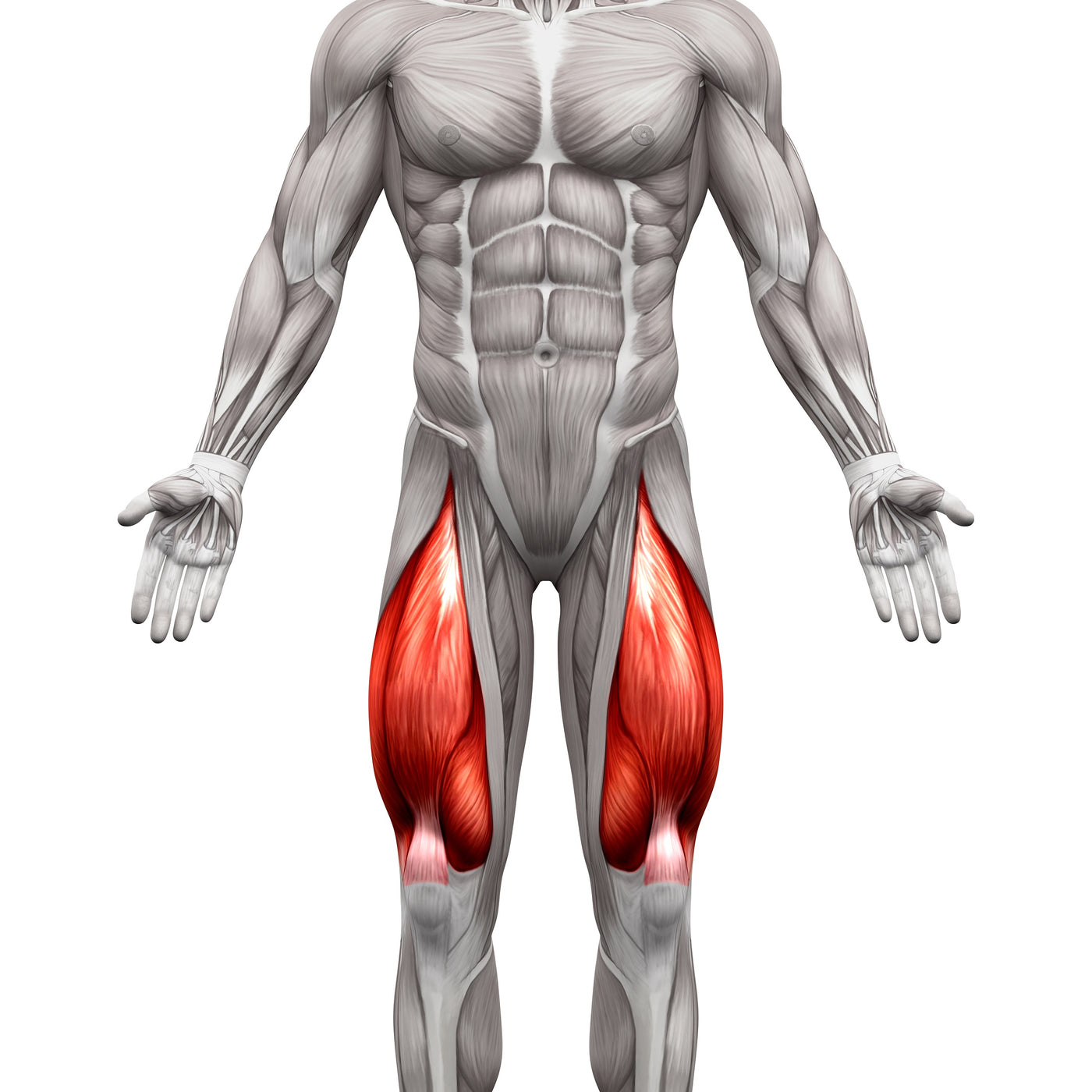
This versatile exercise targets a multitude of muscles, including the quadriceps, hamstrings, and glutes. The quadriceps, situated at the front of the thigh, contract as you lower your body into the lunge, working to extend the knee. Simultaneously, the hamstrings, at the back of the thigh, contribute to the controlled descent by flexing the knee. The glutes play a crucial role in both the extension of the hip and the stabilization of the pelvis during the movement.
Additionally, the calf muscles, including the gastrocnemius and soleus, assist in maintaining balance and stability, especially during the transition between lunging positions. The Lunge's engagement of these major muscle groups makes it an effective exercise for sculpting the lower body, enhancing strength, and promoting functional mobility.
Exercise Execution
Starting Position
Stand upright with the feet hip-width apart and the torso stable. Keep the chest lifted and the arms positioned comfortably at the sides or holding resistance if used.
Movement
Step one foot forward and lower the body by flexing both knees while keeping the front foot flat on the floor and the torso upright. Continue lowering until the front thigh approaches parallel to the floor and the rear knee moves toward the ground.
Ending Position
Push through the front foot to extend the hips and knees, returning to the starting position. Repeat on the same leg or alternate sides.
Video Demonstration
This video demonstrates the proper execution of the lunge, showing controlled lower-body movement, stable foot positioning, and coordinated hip and knee mechanics throughout the exercise.
Exercise Tips
Keep the Front Foot Stable
Maintain full foot contact with the floor to support balanced force transfer.
Control the Descent
Lower the body smoothly and under control to maintain tension on the lower-body muscles.
Keep the Chest Lifted
Maintain an upright torso to support proper spinal alignment and movement mechanics.
Drive Through the Front Heel
Press through the front heel as you rise to emphasize coordinated hip and knee extension.`
Safety Considerations
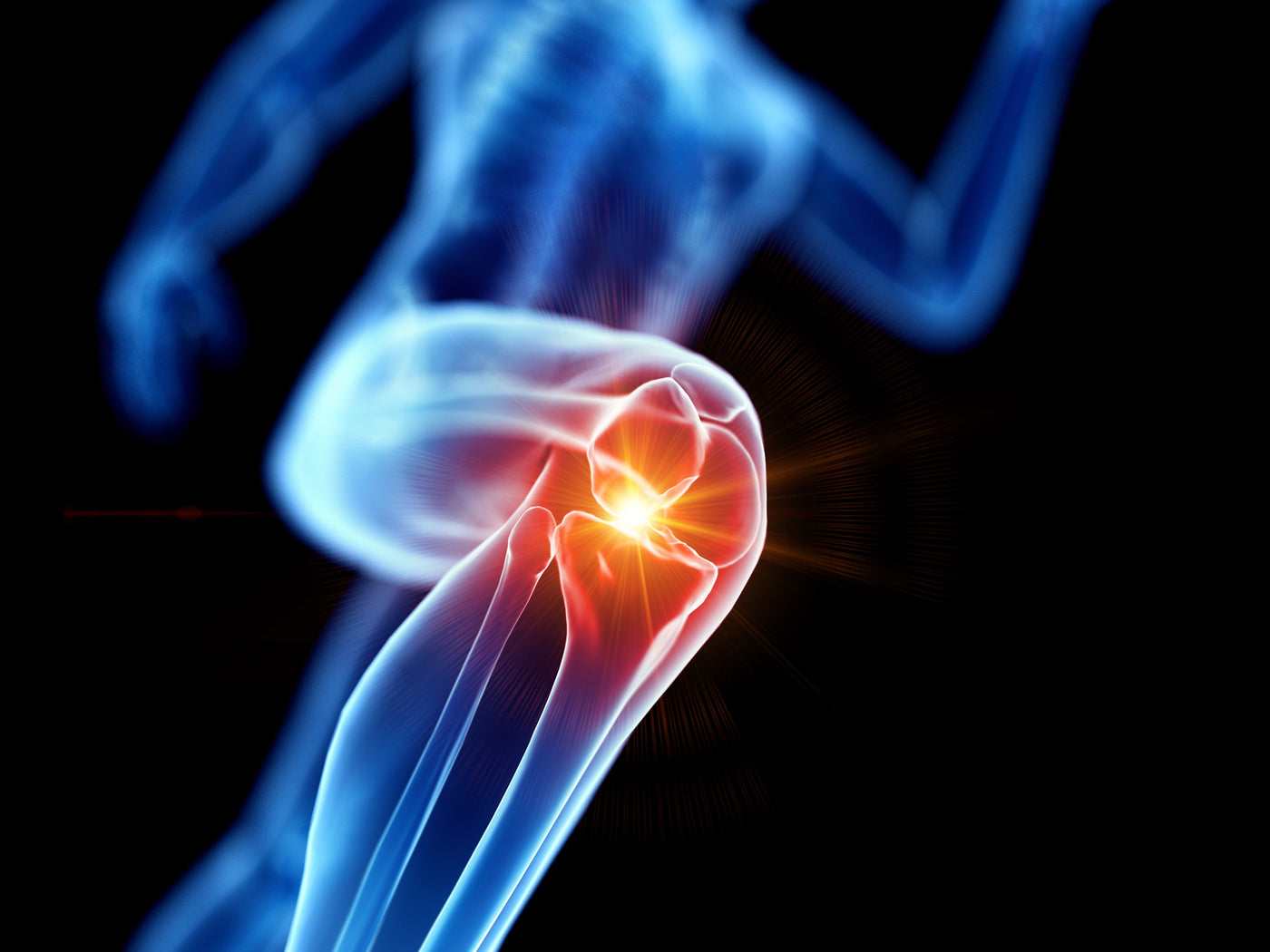
Maintain stable foot positioning throughout the movement and avoid allowing the front knee to collapse inward or travel excessively beyond the toes. Keep the torso upright and avoid leaning excessively forward. Use a controlled range of motion and only lower as far as can be maintained with proper form. If discomfort occurs in the knees, hips, or lower back, stop the exercise and reassess technique before continuing.
Subheading
Lunge vs Squat
The Lunge and Squat both strengthen the lower body, but they differ in movement pattern and stabilization demands. The Lunge is a unilateral movement that trains one leg at a time while challenging balance and coordination. In contrast, the Squat is a bilateral movement performed with both legs working simultaneously. Both exercises are effective for lower-body strength development. The lunge emphasizes unilateral control and balance, while the squat emphasizes total lower-body loading.
RElated Exercises

Continue Your Exercise Education
Mastering exercise technique requires a deeper understanding of biomechanics, injury prevention, and precise movement cues.
The KinX Learning Ultimate Guide series provides structured analysis of 75 popular weight training exercises, helping you train with greater confidence, efficiency, and safety.
Explore the complete system:
Exercise Anatomy and Biomechanics: Ultimate Guide
Exercise Safety and Injury Prevention: Ultimate Guide
Exercise Cues: Precision Coaching for 75 Essential Exercises
Or get all three guides together with the Ultimate Guides Bundle.