
Exercise Reference
HANGING LEG RAISE
The Hanging Leg Raise is a bodyweight core exercise designed to strengthen the muscles responsible for hip flexion and trunk stabilization, particularly the lower portion of the rectus abdominis. Performed while hanging from an overhead bar, the movement requires coordinated control of the hips, abdominal muscles, and upper body to raise and lower the legs through a controlled range of motion. Because the exercise is performed without external support, proper execution emphasizes controlled movement of the legs while maintaining stable positioning of the torso and minimizing excessive swinging.
Below is a quick reference overview of the major muscles and joint actions involved in the Hanging Leg Raise, followed by practical guidance for performing the exercise safely and effectively.
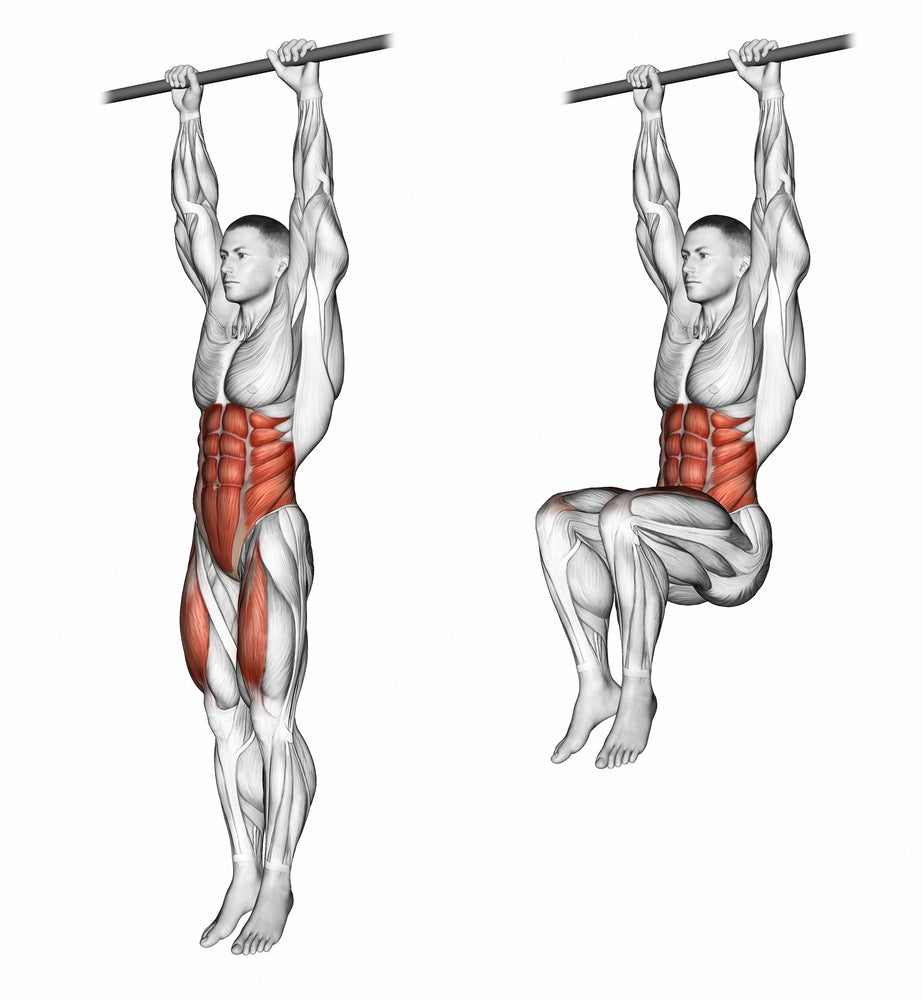
Joint Action and Major Muscles Involved
The Hanging Leg Raise, a potent abdominal exercise, centers around the joint action of hip flexion. As you suspend yourself from a bar and lift your legs, the hip joint undergoes flexion, bringing your thighs towards your chest.
This dynamic movement engages several key muscle groups within the core. The primary focus is on the lower abdominals, specifically the rectus abdominis, as it contracts to lift the legs and flex the hips. The hip flexors, including the iliopsoas, also play a significant role in executing the Hanging Leg Raise, contributing to the flexion of the hip joint.
Additionally, the exercise involves the muscles of the lower back to a lesser extent, as they work to stabilize the spine during the leg raise. The Hanging Leg Raise thus provides a comprehensive challenge to the core, targeting the lower abdominal muscles while fostering strength and stability throughout the midsection.
Video Demonstration
This video demonstrates the proper execution of the hanging leg raise, showing controlled hip flexion and stable torso positioning while raising and lowering the legs.

Safety Considerations
For the Hanging Leg Raise, the most important safety consideration is protecting the lower back and shoulders by maintaining proper control and core engagement throughout the movement. When hanging from a bar, ensure your grip is secure, and engage your shoulder blades to avoid straining your shoulders. Throughout the exercise, engage your core to prevent arching of the lower back, which can lead to injury. Avoid swinging your legs or using momentum, as this places unnecessary stress on the lower back and reduces the effectiveness of the exercise. Focus on slow, controlled movements as you raise and lower your legs. If needed, start with bent knees to build strength and reduce strain.
Exercise Execution
Starting Position
Grip an overhead pull-up bar with both hands slightly wider than shoulder width apart and allow your body to hang with the arms fully extended. Keep the shoulders engaged and the torso stable while the legs hang straight beneath the body.
Movement
Raise the legs forward by flexing at the hips while keeping the movement controlled. Lift the legs until they reach approximately hip height or higher, depending on flexibility and core strength. Maintain a stable torso and avoid swinging the body as the legs move upward.
Ending Position
Slowly lower the legs back to the starting position under control, allowing the hips to extend while maintaining a steady hang. Return the legs to the vertical starting position before beginning the next repetition.
Exercise Tips
Control the Movement
Raise and lower the legs slowly to keep tension on the abdominal muscles and prevent the body from swinging.
Engage the Core
Tighten the abdominal muscles before lifting the legs to help stabilize the torso and support controlled hip flexion.
Avoid Excessive Swinging
Keep the body steady throughout the movement so the abdominal muscles perform the work rather than momentum.
Use a Comfortable Range of Motion
Lift the legs only as high as you can while maintaining proper torso stability and controlled movement.
Hanging Leg Raise vs Abdominal Machine Crunch
The Hanging Leg Raise and Abdominal Machine Crunch both strengthen the abdominal muscles, but they emphasize different movement patterns and stabilization demands.
The Hanging Leg Raise is performed while suspended from an overhead bar and primarily involves hip flexion combined with core stabilization. Because the body is unsupported, the exercise requires significant control of the abdominal muscles, hip flexors, and upper body to stabilize the torso while the legs move through the range of motion.
In contrast, the Abdominal Machine Crunch focuses on spinal flexion while the body is supported by a machine. This support allows the abdominal muscles, particularly the rectus abdominis, to work against resistance with reduced stabilization demands from other muscle groups.
Both exercises are valuable for developing core strength. The hanging leg raise emphasizes total-body stabilization and hip flexion control, while the abdominal machine crunch provides a more isolated approach to strengthening the abdominal muscles.

RElated Exercises

Anatomical, Biomechanical and Practical ExerciseEducation
The Exercise Classroom
Explore the Hanging Leg Raise in The Exercise Classroom to learn more about the muscles involved, joint actions, and biomechanical principles that influence effective core training.

Continue YourExercise Education
Mastering exercise technique requires a deeper understanding of biomechanics, injury prevention, and precise movement cues.
The KinX Learning Ultimate Guide series provides structured analysis of 75 popular weight training exercises, helping you train with greater confidence, efficiency, and safety.
Explore the complete system:
Exercise Anatomy and Biomechanics: Ultimate Guide
Exercise Safety and Injury Prevention: Ultimate Guide
Exercise Cues: Precision Coaching for 75 Essential Exercises
Or get all three guides together with the Ultimate Guides Bundle