Understanding Barbell Bicep Curl Mechanics and Elbow Flexion
Understanding Barbell Bicep Curl Mechanics and Elbow Flexion
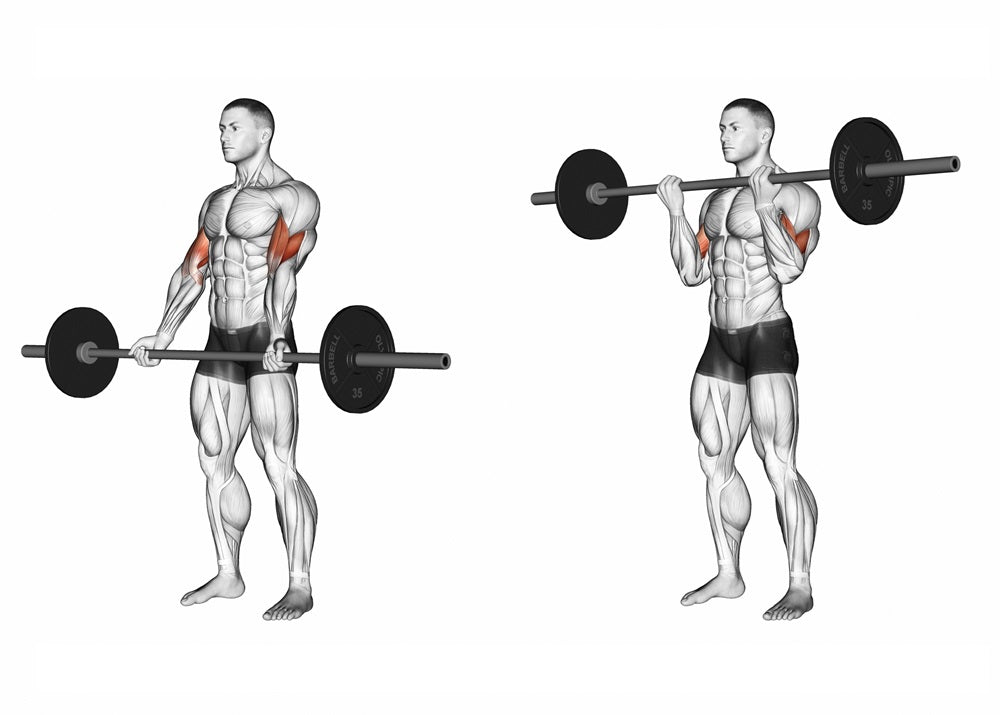
The barbell bicep curl is one of the most recognized upper-body resistance exercises. While often associated with arm development, the movement also provides an excellent opportunity to understand elbow flexion mechanics, muscle function, and exercise technique.
By understanding how the muscles and joints work together during the barbell bicep curl, exercisers can improve movement quality, exercise effectiveness, and overall training awareness.
Primary Joint Actions During the Barbell Bicep Curl
The primary joint action involved in the barbell bicep curl is:
-
Elbow flexion
As the barbell is lifted toward the shoulders, the angle at the elbow decreases, requiring coordinated activation of the elbow flexor muscles.
The shoulder and wrist joints also contribute by helping maintain proper positioning throughout the movement.
Prime Movers Involved in the Barbell Bicep Curl
Biceps Brachii
The biceps brachii is the most recognized muscle involved in the curl exercise.
In addition to contributing to elbow flexion, the biceps brachii also assists with forearm supination and plays a role in shoulder stability during upper-body movements.
Brachialis
The brachialis lies beneath the biceps brachii and is a powerful contributor to elbow flexion.
Because it attaches directly to the ulna, it functions regardless of forearm position and contributes significantly throughout the range of motion.
Brachioradialis
The brachioradialis assists with elbow flexion and contributes to movement control during the exercise.
This muscle is particularly active when the forearm is positioned between pronation and supination.
Elbow Flexion Mechanics
During the upward phase of the curl, the elbow flexors work concentrically to raise the barbell.
During the lowering phase, these same muscles work eccentrically to control the descent of the resistance.
Understanding both phases of the movement helps reinforce the importance of controlled exercise execution rather than relying on momentum.
Common Technique Considerations
Effective barbell bicep curl technique includes:
-
Maintaining an upright posture
-
Keeping the elbows close to the torso
-
Using a controlled range of motion
-
Avoiding excessive body swing
-
Controlling the lowering phase
These considerations help support movement quality while improving exercise effectiveness.
The Exercise Classroom
The Exercise Classroom focuses on anatomical, biomechanical, and practical exercise education designed to improve movement understanding and exercise execution.
The Barbell Bicep Curl lesson explores:
-
exercise execution
-
elbow flexion mechanics
-
prime movers
-
muscle mechanics
-
biomechanical considerations
-
safety and injury prevention
-
proper technique
Related Content
Barbell Bicep Curl Exercise Page
The Exercise Classroom: Barbell Bicep Curl
Learn More
Learn More @ KinX Learning
Anatomical, Biomechanical and Practical Exercise Education
kinxlearning.com