
Muscle Anatomy
Posterior Deltoid
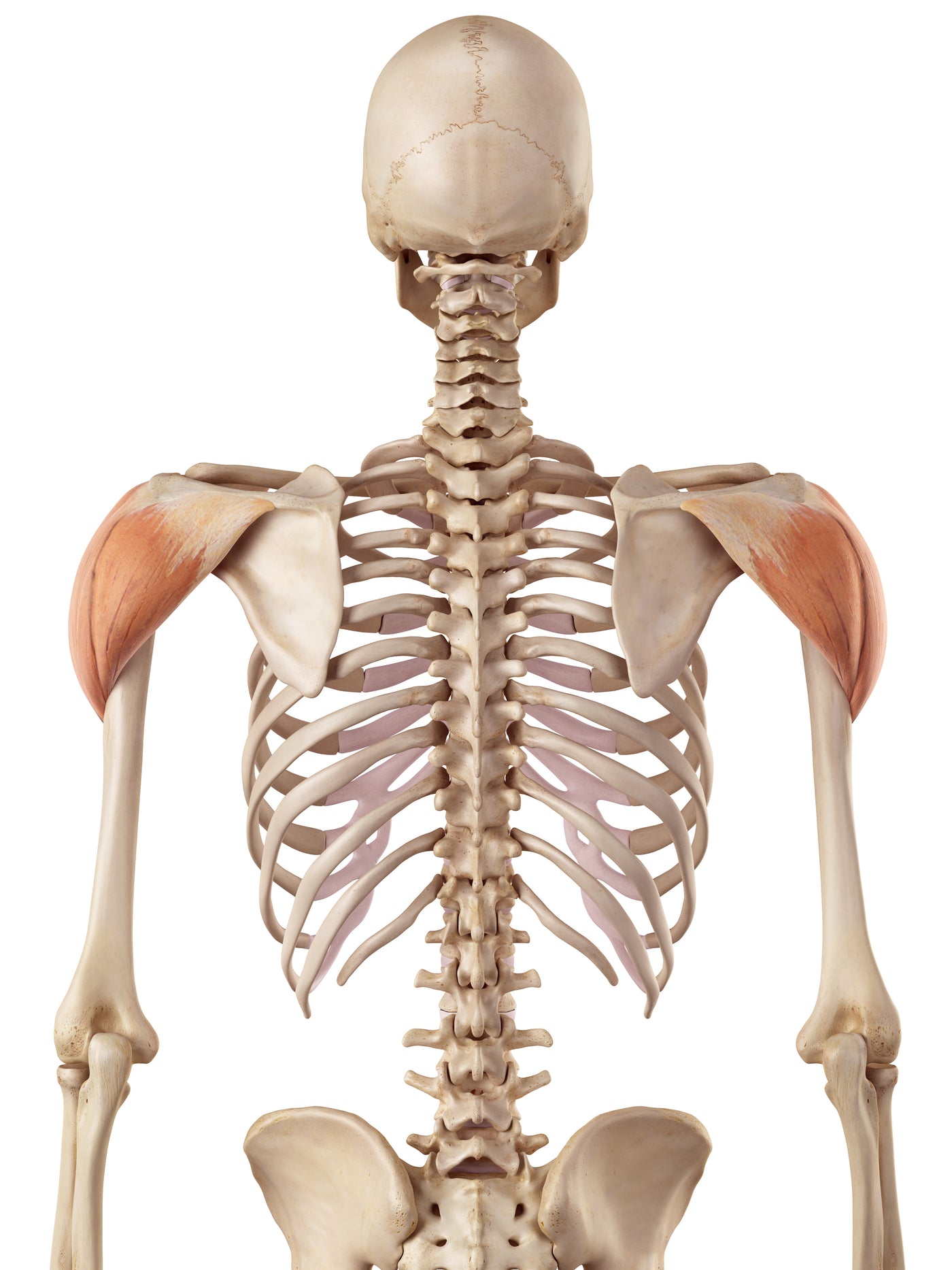
The posterior deltoid, positioned at the rear of the shoulder, is a triangular muscle that completes the deltoid muscle group.
Origin:
Arising from the spine of the scapula, the posterior deltoid's fibers spread out, attaching to the deltoid tuberosity on the humerus.
Insertion:
The muscle inserts onto the deltoid tuberosity, a raised area on the lateral surface of the humerus.
Function:
The primary function of the posterior deltoid is shoulder extension, drawing the arm backward. It plays a significant role in shoulder horizontal abduction, aiding in moving the arm away from the midline. The posterior deltoid contributes to overall shoulder strength and stability, particularly in activities involving pulling or reaching behind the body.
Posterior Deltoid
Related Exercises
Best Exercises for the Posterior Deltoid
The posterior deltoid is active during shoulder extension and horizontal abduction, playing a key role in pulling movements and posture. Exercises that emphasize controlled backward and outward arm movement are most effective for targeting this portion of the deltoid.
Primary Isolation Exercises
Lateral Prone Raise (Reverse Fly)
Supporting Movements
Seated Row
Bent-Over Dumbbell Row
How to Emphasize the Posterior Deltoid
Focus on moving the arms backward and outward through controlled motion
Keep the chest stable to reduce momentum
Avoid relying on the upper back muscles excessively
Control both the lifting and lowering phases
Explore Exercise Technique and Execution
Each exercise listed above includes a full breakdown of proper form, muscle involvement, biomechanics, and safety considerations. Select an exercise to learn how to train the deltoid effectively.