
Muscle Anatomy
flexor pollicis longus
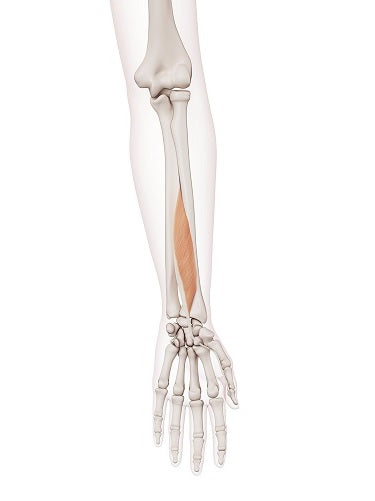
The flexor pollicis longus muscle is located in the anterior compartment of the forearm, playing a crucial role in the flexion of the thumb. It is a relatively long and slender muscle.
Origin:
Originating from the anterior surface of the radius and the adjacent interosseous membrane, the flexor pollicis longus takes its starting point from the bony and membranous structures in the forearm.
Insertion:
The muscle inserts into the base of the distal phalanx of the thumb. Specifically, it inserts into the palmar surface of the base of the distal phalanx. This insertion site establishes a connection with the bone of the thumb.
Function:
Functionally, the flexor pollicis longus is a powerful flexor of the thumb at both the interphalangeal (IP) joint and the metacarpophalangeal (MP) joint. It actively participates in bending the thumb, allowing for actions such as grasping objects and opposing the thumb to the other fingers (opposition). The muscle is particularly important for precision grip and fine motor tasks involving the thumb, such as writing, picking up small objects, and manipulating tools. The flexor pollicis longus contributes significantly to the overall functionality and versatility of the hand.
flexor pollicis longus
Function in Exercise and Grip Control
The flexor pollicis longus is a forearm muscle responsible for flexion of the thumb and contributes to gripping and hand control during exercise. It plays an important role in maintaining thumb stability and grip strength during pulling and lifting movements.
The muscle works alongside other thumb, finger, and wrist flexors to support coordinated hand movement and forearm stability.
Application to Exercise Performance
The flexor pollicis longus contributes to:
Thumb flexion and grip control during exercise
Hand stabilization during pulling and lifting movements
Forearm stability during repetitive gripping activity
Maintenance of strong grip mechanics during resistance training