
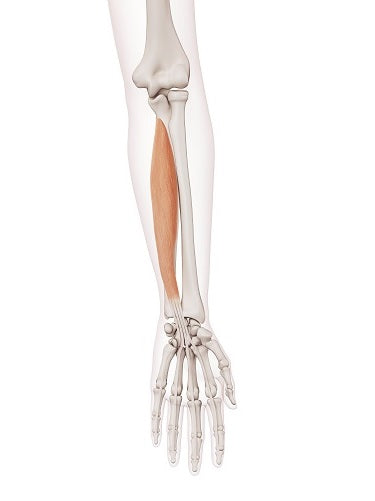
Muscle Anatomy
flexor digitorum profundus
The flexor digitorum profundus muscle is located in the anterior compartment of the forearm, forming part of the flexor muscles responsible for bending the fingers. It is a deep muscle situated beneath the flexor digitorum superficialis.
Origin:
Originating from the proximal two-thirds of the anterior and medial surfaces of the ulna, the flexor digitorum profundus takes its starting point from the bony structure on the inner side of the forearm.
Insertion:
The muscle inserts into the distal phalanges of the four fingers (index, middle, ring, and little fingers). Specifically, it inserts into the base of the distal phalanx of each finger. This insertion site establishes a connection with the bones of the hand.
Function:
Functionally, the flexor digitorum profundus is a powerful flexor of the fingers at both the proximal interphalangeal (PIP) and distal interphalangeal (DIP) joints. It actively participates in bending the entire finger, from the middle to the tip. The muscle enables gripping and manipulation of objects by providing strength in finger flexion. It is crucial for activities requiring a strong grip, such as grasping tools, holding objects, and performing intricate tasks that involve precise finger movements. The flexor digitorum profundus contributes to the overall functionality and dexterity of the hand.
flexor digitorum profundus
Function in Exercise and Grip Strength
The flexor digitorum profundus is a deep forearm muscle responsible for flexion of the fingers, particularly at the distal joints of the fingers. It plays a major role in grip strength and contributes to hand control during pulling, lifting, and carrying movements.
The muscle works together with other finger and wrist flexors to maintain gripping ability and forearm stability during exercise.
Application to Exercise Performance
The flexor digitorum profundus contributes to:
Grip strength during pulling and lifting exercises
Finger flexion and hand stabilization during resistance training
Forearm stability during repetitive gripping activity
Maintenance of strong hand positioning during exercise