
Muscle Anatomy
diaphragm
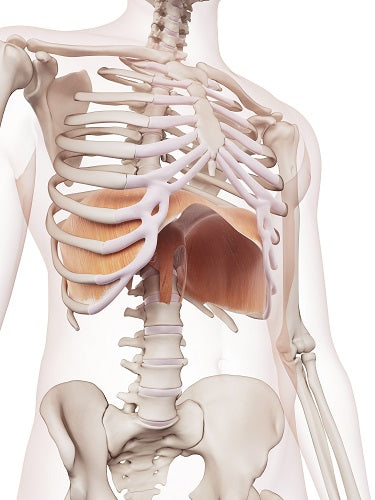
The diaphragm, a large, dome-shaped muscle, separates the thoracic and abdominal cavities, playing a pivotal role in respiration.
Origin:
Arising from multiple points, including the xiphoid process, costal cartilages of the lower ribs, and lumbar vertebrae, the diaphragm forms a musculotendinous structure.
Insertion:
Converging towards a central tendon, the muscle inserts into the central tendon, creating a strong anchor point.
Function:
As the primary muscle of respiration, the diaphragm contracts during inhalation, causing it to flatten and increase thoracic volume. This action lowers air pressure, facilitating air entry into the lungs. During exhalation, the diaphragm relaxes, allowing the thoracic cavity to decrease in size, expelling air from the lungs. Additionally, the diaphragm aids in other functions, such as assisting in core stability and influencing intra-abdominal pressure.
Diaphragm
Function in Exercise and Breathing
The diaphragm is the primary muscle involved in breathing and plays a critical role in respiration during exercise. Proper diaphragmatic breathing supports core stability, oxygen delivery, and exercise performance during both resistance training and cardiovascular activity.
The diaphragm works continuously during all forms of exercise to assist with breathing mechanics and intra-abdominal pressure.